Damsyik
Artikel penuh boleh didapati dalam bahasa Arab dan Bahasa Inggeris
Why it matters
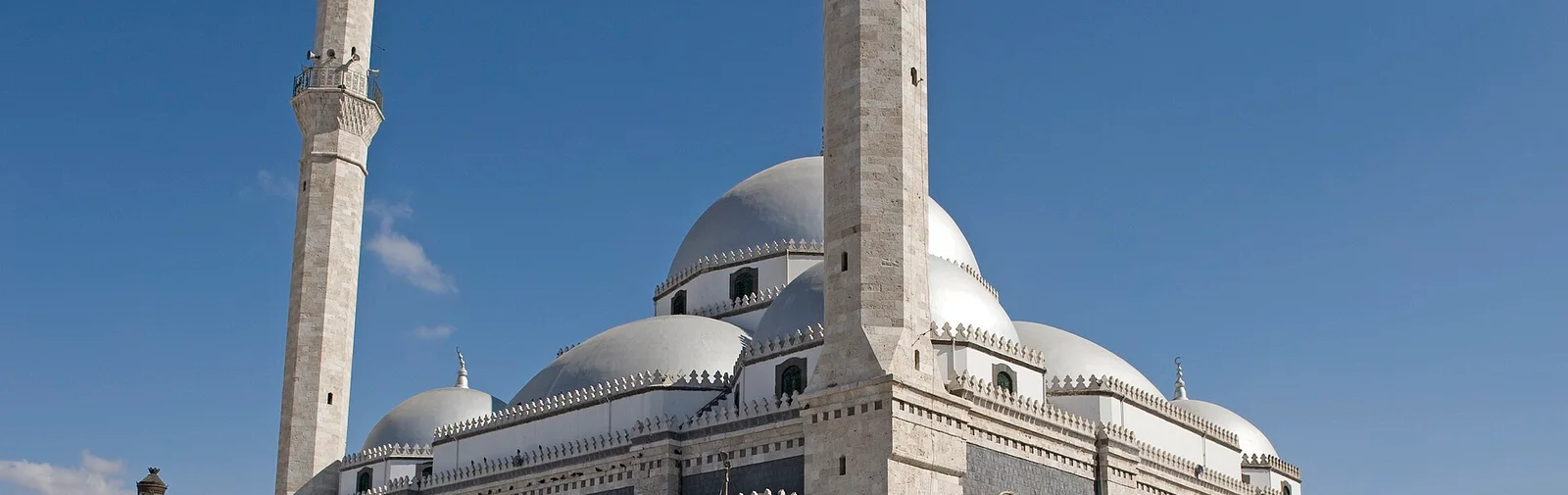
The Great Umayyad Mosque is one of the defining monuments of early Islamic architecture. Commissioned by the caliph al-Walid I in the early eighth century, it expressed the importance of Damascus when the city was the centre of the Umayyad caliphate. For Muslim visitors, it brings together congregational worship, Qur’anic learning and more than thirteen centuries of urban memory in a single living space.
Historical context
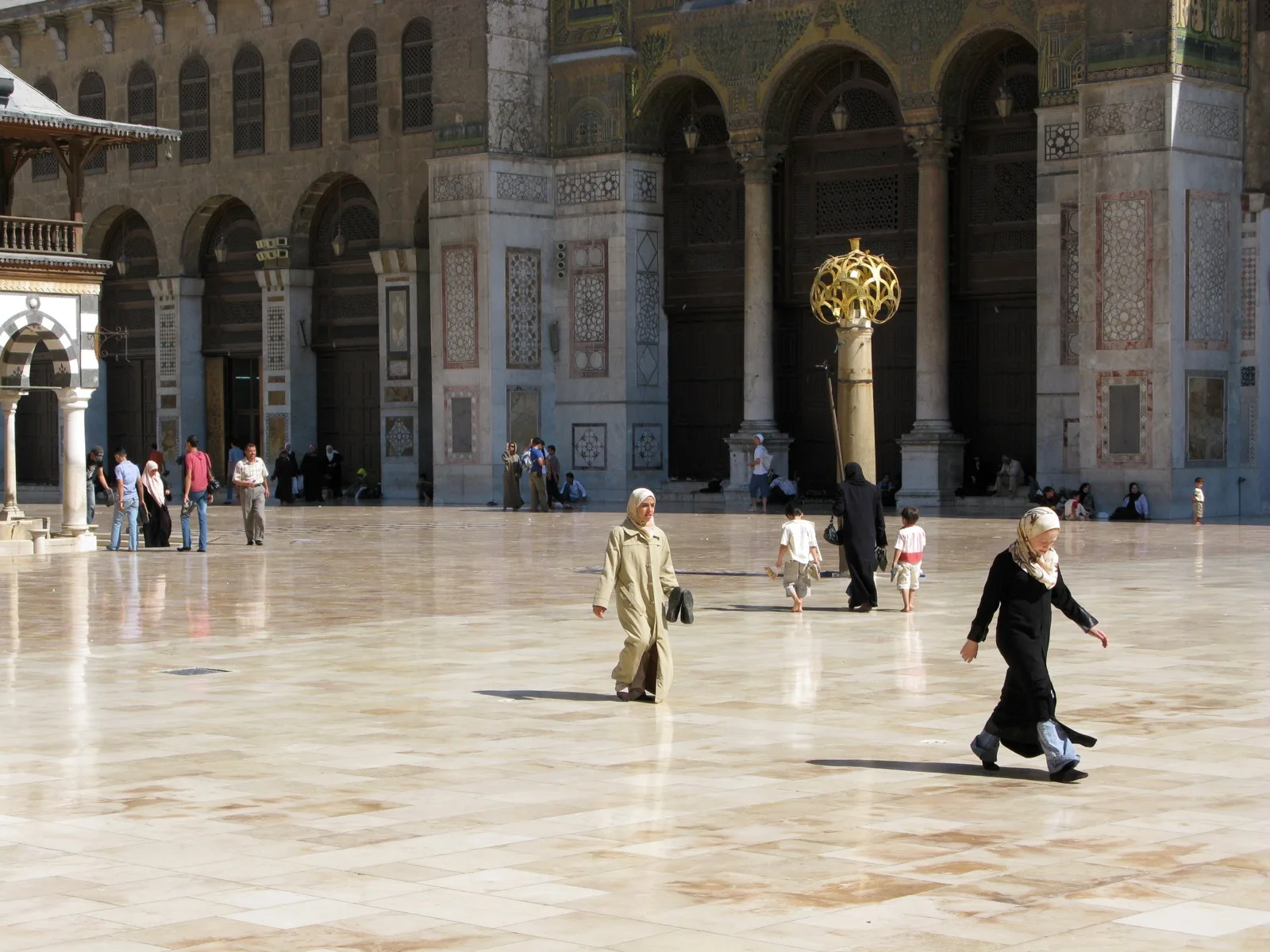
Its site had earlier Roman and Christian religious uses. The monumental courtyard, long prayer hall and landscape mosaics show how the early Islamic city developed a distinctive architectural language. Fires, repairs and rebuilding have also shaped the mosque: what visitors see belongs to several periods. The shrine associated with Prophet Yahya inside the prayer hall adds another layer of sacred memory, explained separately from the mosque’s architectural history.
Your visit
Enter with time to look closely: the scale of the courtyard, the arcades and surviving mosaics reward an unhurried visit. A guide can connect these features with Damascus’s role as a capital and with the mosque’s continuing religious life. Plan around congregational prayers and ask before photographing worshippers. Combine the mosque with the nearby mausoleum of Salah al-Din, while treating each as a distinct story.
Tapak seni bina atau tamadun
Maksud penisbahan tapak
Tapak seni bina atau tamadun. Kewujudan maqam tidak dengan sendirinya membuktikan adanya kubur. Oleh itu, setiap kad dan halaman menyatakan pengelasan sejarahnya, dengan membezakan bukti sejarah daripada tradisi keagamaan yang masih hidup.
Adab lawatan
Pakai pakaian yang sopan. Hormati waktu solat dan arahan penjaga tapak; minta izin sebelum mengambil gambar jemaah atau pelawat.
Keadaan dan akses
Jam buka dan keperluan pakaian disemak secara tempatan. Lawatan hanya dimasukkan selepas semakan tempatan terkini tentang waktu buka, akses dan keadaan laluan.