Damascus
El artículo completo está disponible en árabe e inglés
Why it matters
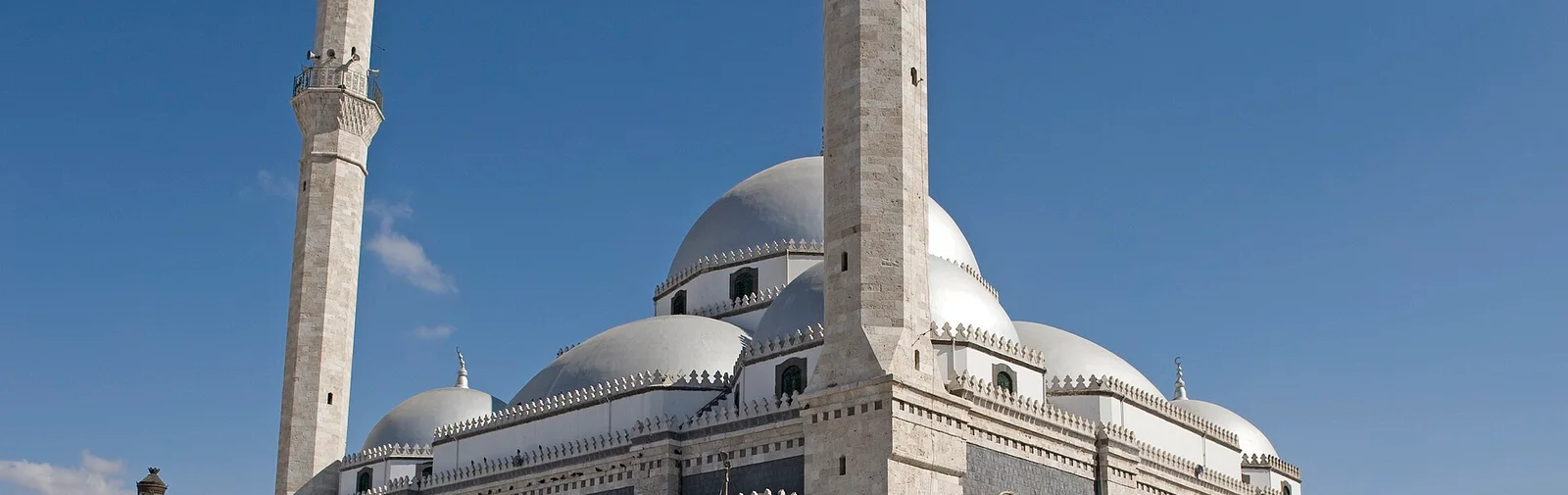
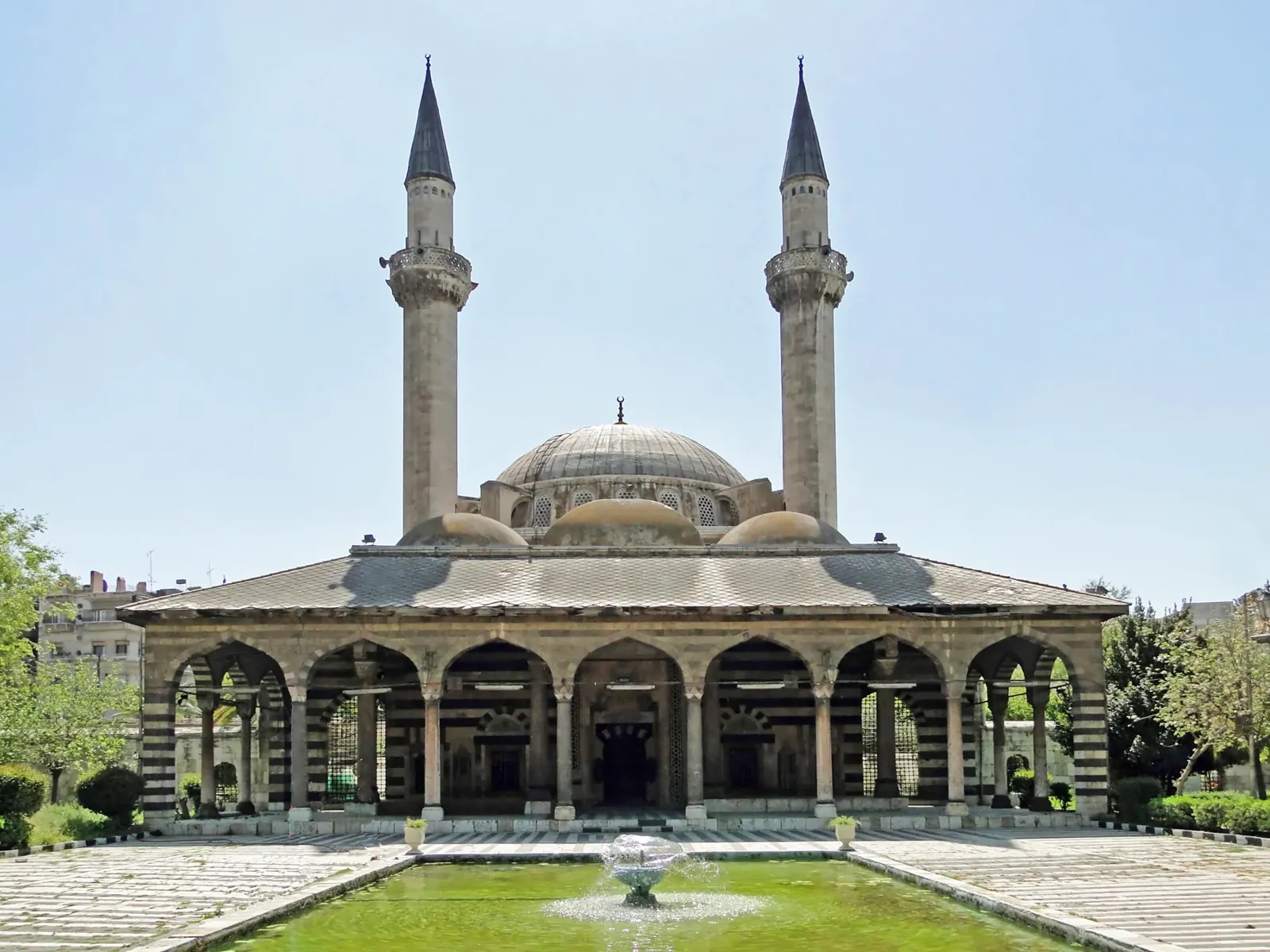
The Great Umayyad Mosque is one of the defining monuments of early Islamic architecture. Commissioned by the caliph al-Walid I in the early eighth century, it expressed the importance of Damascus when the city was the centre of the Umayyad caliphate. For Muslim visitors, it brings together congregational worship, Qur’anic learning and more than thirteen centuries of urban memory in a single living space.
Historical context
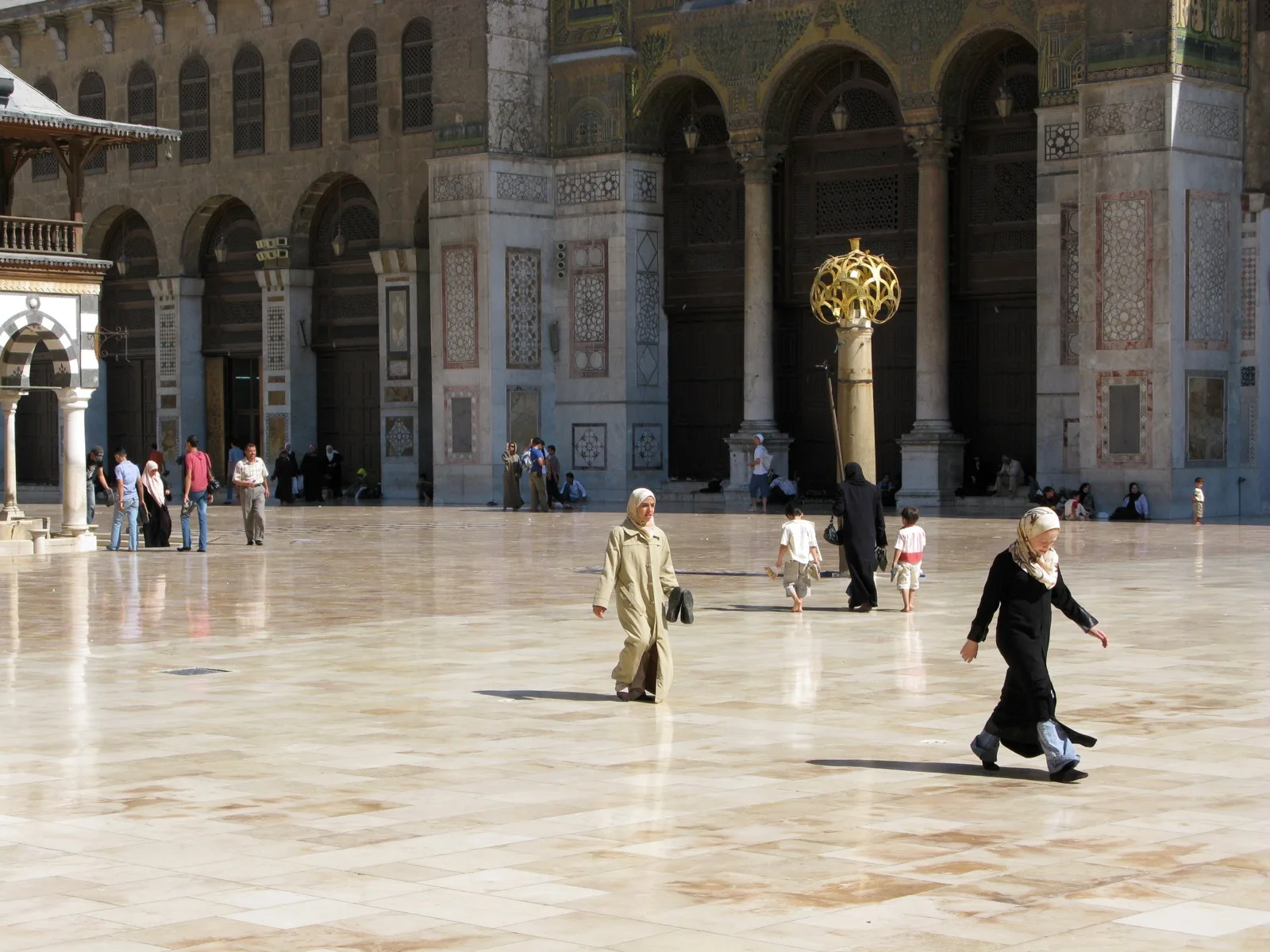
Its site had earlier Roman and Christian religious uses. The monumental courtyard, long prayer hall and landscape mosaics show how the early Islamic city developed a distinctive architectural language. Fires, repairs and rebuilding have also shaped the mosque: what visitors see belongs to several periods. The shrine associated with Prophet Yahya inside the prayer hall adds another layer of sacred memory, explained separately from the mosque’s architectural history.
Your visit
Enter with time to look closely: the scale of the courtyard, the arcades and surviving mosaics reward an unhurried visit. A guide can connect these features with Damascus’s role as a capital and with the mosque’s continuing religious life. Plan around congregational prayers and ask before photographing worshippers. Combine the mosque with the nearby mausoleum of Salah al-Din, while treating each as a distinct story.
Sitio arquitectónico o civilizatorio
Qué significa la atribución
Sitio arquitectónico o civilizatorio. Un maqam no prueba por sí solo un entierro. Cada ficha distingue la documentación de la tradición devocional viva.
Respeto durante la visita
Se espera vestimenta modesta. Respete oraciones e indicaciones; pida permiso antes de fotografiar.
Estado y acceso
Horarios y vestimenta se verifican localmente. La visita se incluye solo tras verificar horarios, acceso y ruta.