
دمشق
مکمل مضمون انگریزی اور عربی زبان میں دستیاب ہے۔
Why it matters
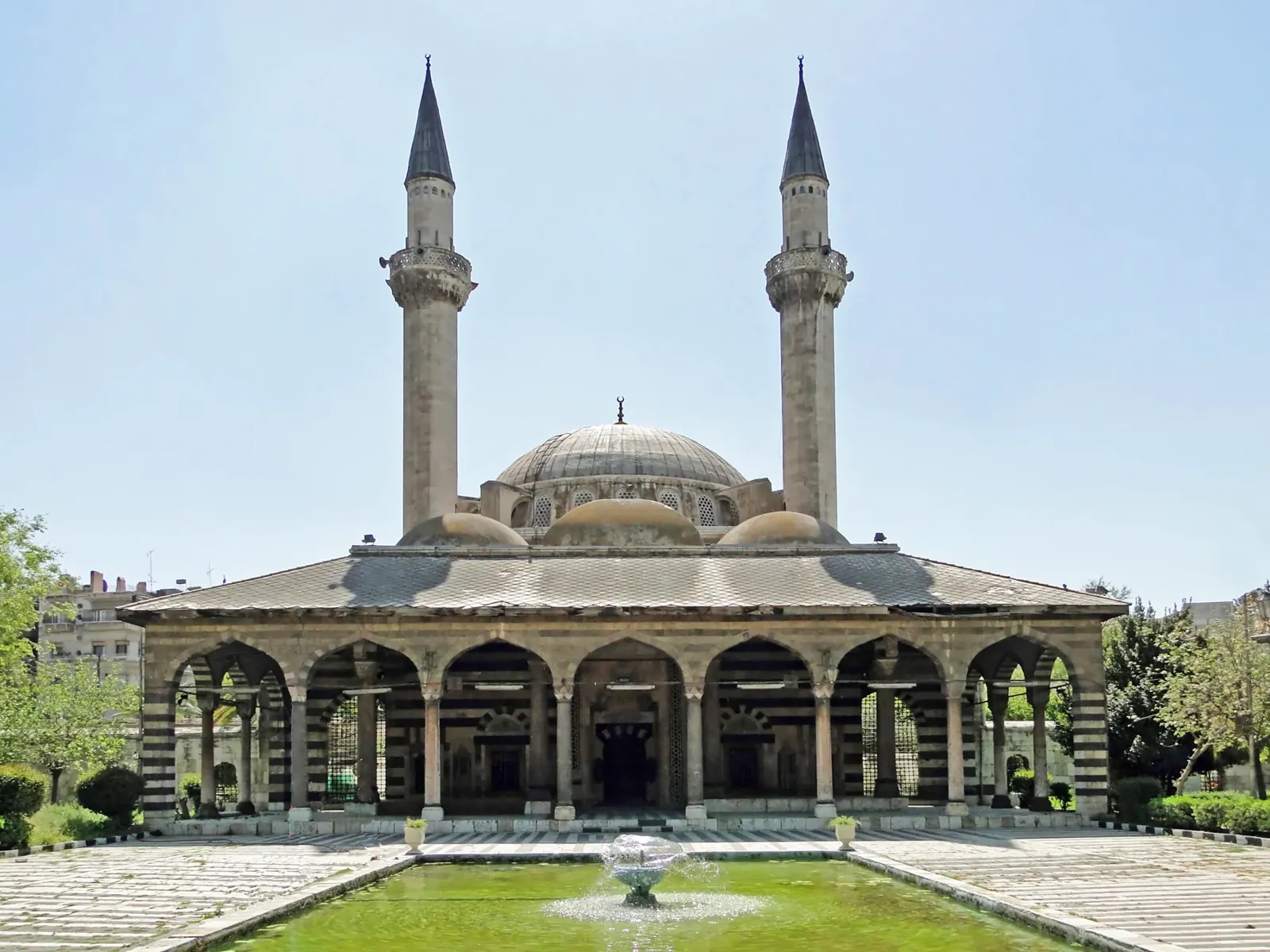
The Sulaymaniyya Takiyya tells the story of Damascus as a city of travellers and pilgrims. Commissioned by Sultan Sulayman the Magnificent and associated with the architect Sinan, the sixteenth-century complex expresses an Ottoman vision of hospitality, worship and public provision. Its importance extends beyond the central mosque to the supporting spaces arranged around it.
Historical context
Damascus was a major gathering point on the overland pilgrimage route to Mecca. Institutions serving travellers help explain how the Hajj shaped the city’s economy and architecture, even for people who never undertook the journey themselves. The domes, slender minarets and courtyard arrangement offer a different architectural experience from the early Islamic fabric of the Umayyad Mosque.
Your visit
Use the visit to compare two eras of Damascus: an early caliphal capital and a later Ottoman pilgrimage city. Explore the courtyard and exterior composition where accessible, with interior and any exhibition or craft areas checked separately. Do not assume that all parts of the complex are open or retain their historical functions.
تعمیراتی یا تہذیبی مقام
نسبت کا مطلب
تعمیراتی یا تہذیبی مقام. کسی مقام کی موجودگی بذاتِ خود وہاں تدفین ثابت نہیں کرتی۔ اس لیے ہر کارڈ اور صفحے پر تاریخی درجہ بندی واضح کی گئی ہے اور مستند تاریخ کو رائج مذہبی روایت سے الگ رکھا گیا ہے۔
آدابِ زیارت
باوقار لباس پہنیں۔ نماز کے اوقات اور منتظمین کی ہدایات کا احترام کریں؛ نمازیوں یا زائرین کی تصویر لینے سے پہلے اجازت لیں۔
حالت اور رسائی
کھولنے کے اوقات اور کپڑے کی ضروریات مقامی طور پر چیک کیا جاتا ہے. کسی مقام کی زیارت اسی وقت پروگرام میں شامل ہوتی ہے جب اوقات، رسائی اور راستے کی موجودہ حالت کی مقامی تصدیق ہو جائے۔