
Damascus
Het uitgebreide artikel is beschikbaar in het Arabisch en Engels
Why it matters
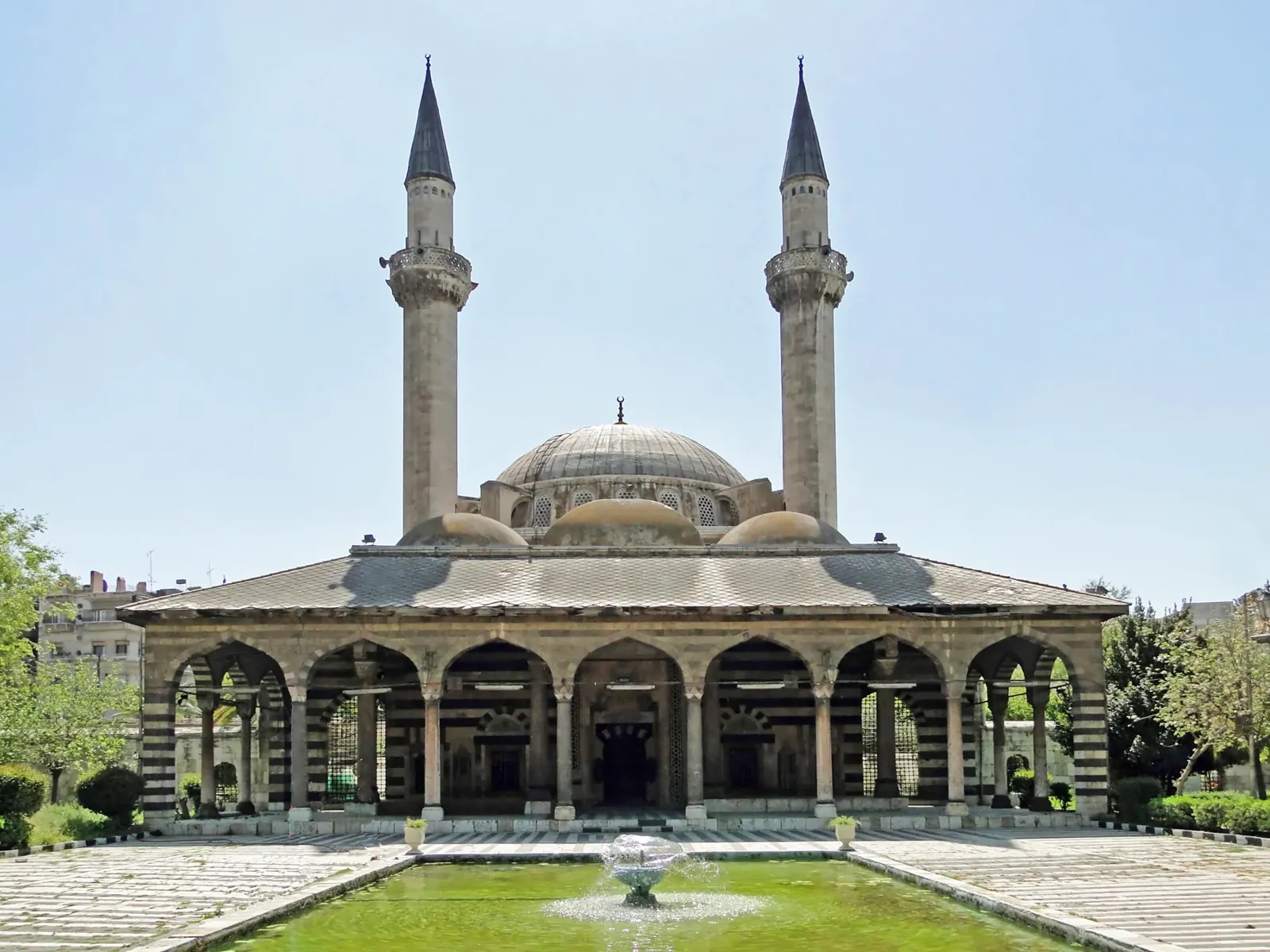
The Sulaymaniyya Takiyya tells the story of Damascus as a city of travellers and pilgrims. Commissioned by Sultan Sulayman the Magnificent and associated with the architect Sinan, the sixteenth-century complex expresses an Ottoman vision of hospitality, worship and public provision. Its importance extends beyond the central mosque to the supporting spaces arranged around it.
Historical context
Damascus was a major gathering point on the overland pilgrimage route to Mecca. Institutions serving travellers help explain how the Hajj shaped the city’s economy and architecture, even for people who never undertook the journey themselves. The domes, slender minarets and courtyard arrangement offer a different architectural experience from the early Islamic fabric of the Umayyad Mosque.
Your visit
Use the visit to compare two eras of Damascus: an early caliphal capital and a later Ottoman pilgrimage city. Explore the courtyard and exterior composition where accessible, with interior and any exhibition or craft areas checked separately. Do not assume that all parts of the complex are open or retain their historical functions.
Architectonische of cultuurhistorische site
Wat de toeschrijving betekent
Architectonische of cultuurhistorische site. Een maqam bewijst op zichzelf geen graf. Elke kaart maakt daarom onderscheid tussen documentatie en levende traditie.
Bezoekersetiquette
Bescheiden kleding is gewenst. Respecteer gebedstijden en aanwijzingen; vraag toestemming voor foto’s.
Staat en toegang
Openingstijden en kledingvoorschriften worden lokaal gecontroleerd. Een bezoek wordt pas opgenomen na lokale controle van tijden, toegang en route.