
Damaskus
Artikel penuh tersedia dalam bahasa Arab dan Inggris
Why it matters
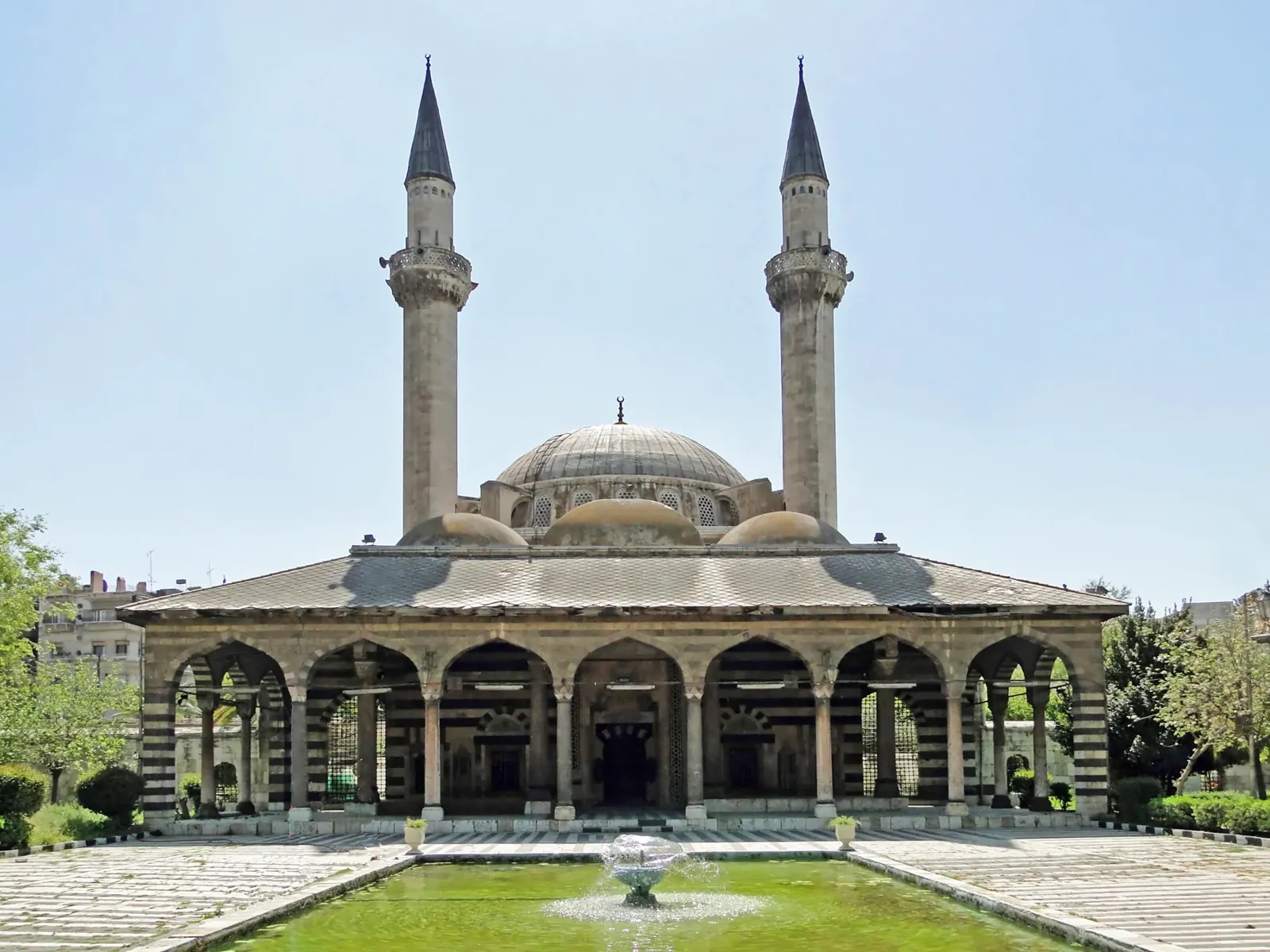
The Sulaymaniyya Takiyya tells the story of Damascus as a city of travellers and pilgrims. Commissioned by Sultan Sulayman the Magnificent and associated with the architect Sinan, the sixteenth-century complex expresses an Ottoman vision of hospitality, worship and public provision. Its importance extends beyond the central mosque to the supporting spaces arranged around it.
Historical context
Damascus was a major gathering point on the overland pilgrimage route to Mecca. Institutions serving travellers help explain how the Hajj shaped the city’s economy and architecture, even for people who never undertook the journey themselves. The domes, slender minarets and courtyard arrangement offer a different architectural experience from the early Islamic fabric of the Umayyad Mosque.
Your visit
Use the visit to compare two eras of Damascus: an early caliphal capital and a later Ottoman pilgrimage city. Explore the courtyard and exterior composition where accessible, with interior and any exhibition or craft areas checked separately. Do not assume that all parts of the complex are open or retain their historical functions.
Situs arsitektur atau peradaban
Makna penisbatan situs
Situs arsitektur atau peradaban. Keberadaan maqam tidak dengan sendirinya membuktikan adanya makam. Karena itu, setiap kartu dan halaman menjelaskan klasifikasi sejarahnya serta membedakan bukti tertulis dari tradisi keagamaan yang hidup.
Adab berkunjung
Kenakan pakaian yang sopan. Hormati waktu salat dan arahan pengelola situs; mintalah izin sebelum memotret orang yang beribadah atau pengunjung.
Kondisi dan akses
Waktu buka dan persyaratan pakaian diperiksa secara lokal. Kunjungan hanya dimasukkan setelah jam buka, akses, dan kondisi rute diperiksa secara lokal berdasarkan informasi terbaru.