
Damascus
Der ausführliche Artikel ist auf Arabisch und Englisch verfügbar
Why it matters
The shrine of Sayyida Ruqayya in Old Damascus is traditionally associated with a young daughter of al-Husayn, the Prophet’s grandson. For many visitors, especially within Shi‘i tradition, it gives a deeply personal focus to the remembrance of Karbala: the suffering of children and the experience of the Prophet’s family after the battle.
Historical context
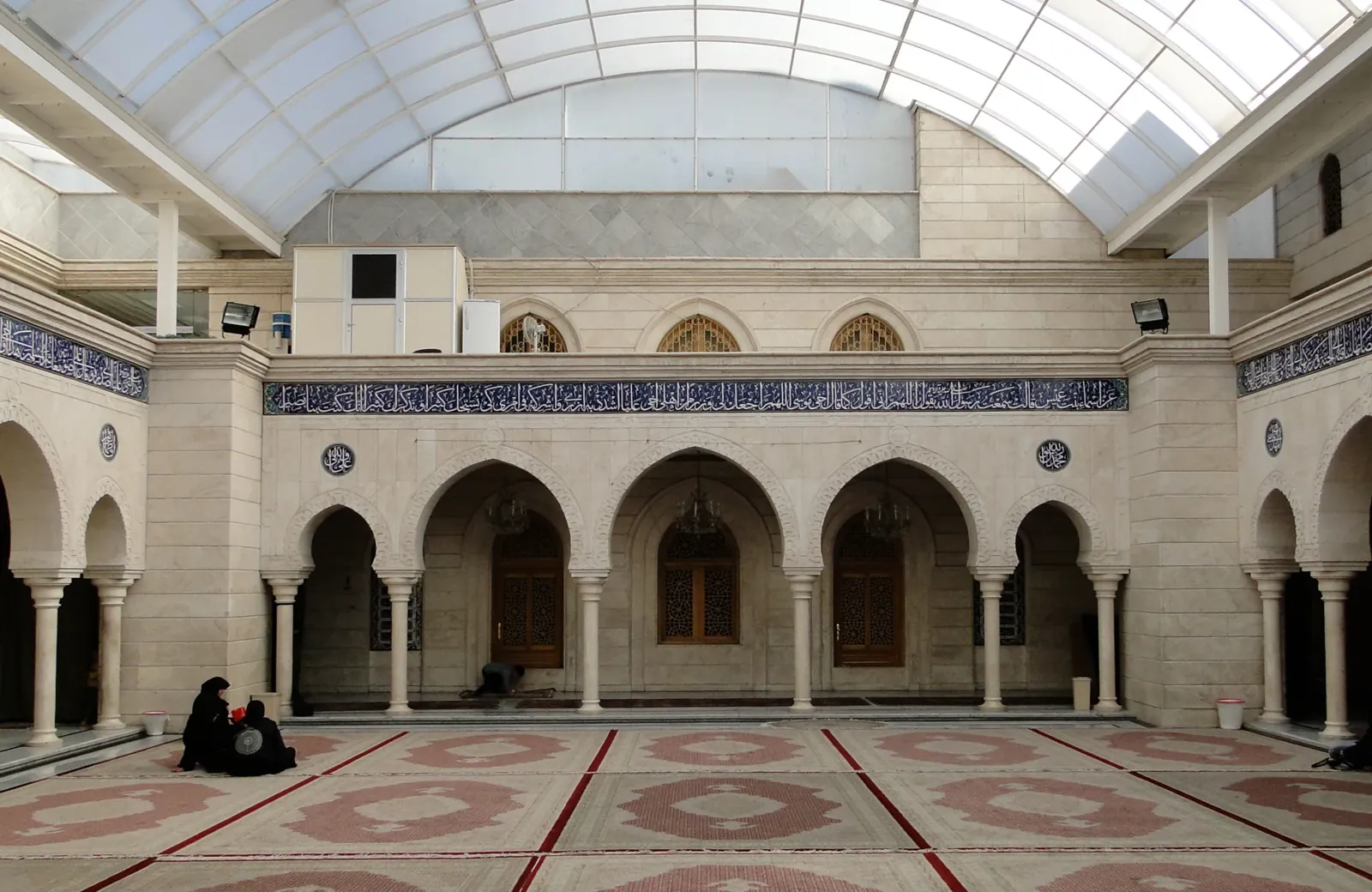
Accounts differ over the child’s identity, name and the details of her story. The shrine should therefore be introduced as a living devotional tradition, with its historical uncertainties made clear. Its richly decorated contemporary interior belongs to the later history of the site; it should not be presented as an unchanged seventh-century room.
Your visit
The location can be combined with a walk through the lanes near the Umayyad Mosque. Where entry is available, observe the decorative work and the way visitors use the space, quietly and without intruding on grief or prayer. A respectful guide explains what the tradition means to devotees while keeping disputed biography separate from established history.
Traditionell zugeschriebene Grabstätte
Was die Zuordnung bedeutet
Traditionell zugeschriebene Grabstätte. Ein Maqam belegt nicht automatisch eine Bestattung. Jede Seite trennt daher historische Dokumentation von lebendiger Andachtstradition.
Hinweise für den Besuch
Bedeckende Kleidung wird erwartet. Respektieren Sie Gebetszeiten und Hinweise; fragen Sie vor Personenaufnahmen.
Zustand und Zugang
Öffnungszeiten und Kleidungsvorschriften werden vor Ort geprüft. Ein Besuch wird erst nach aktueller Prüfung von Zeiten, Zugang und Route eingeplant.
