Damascus
Der ausführliche Artikel ist auf Arabisch und Englisch verfügbar
Why it matters
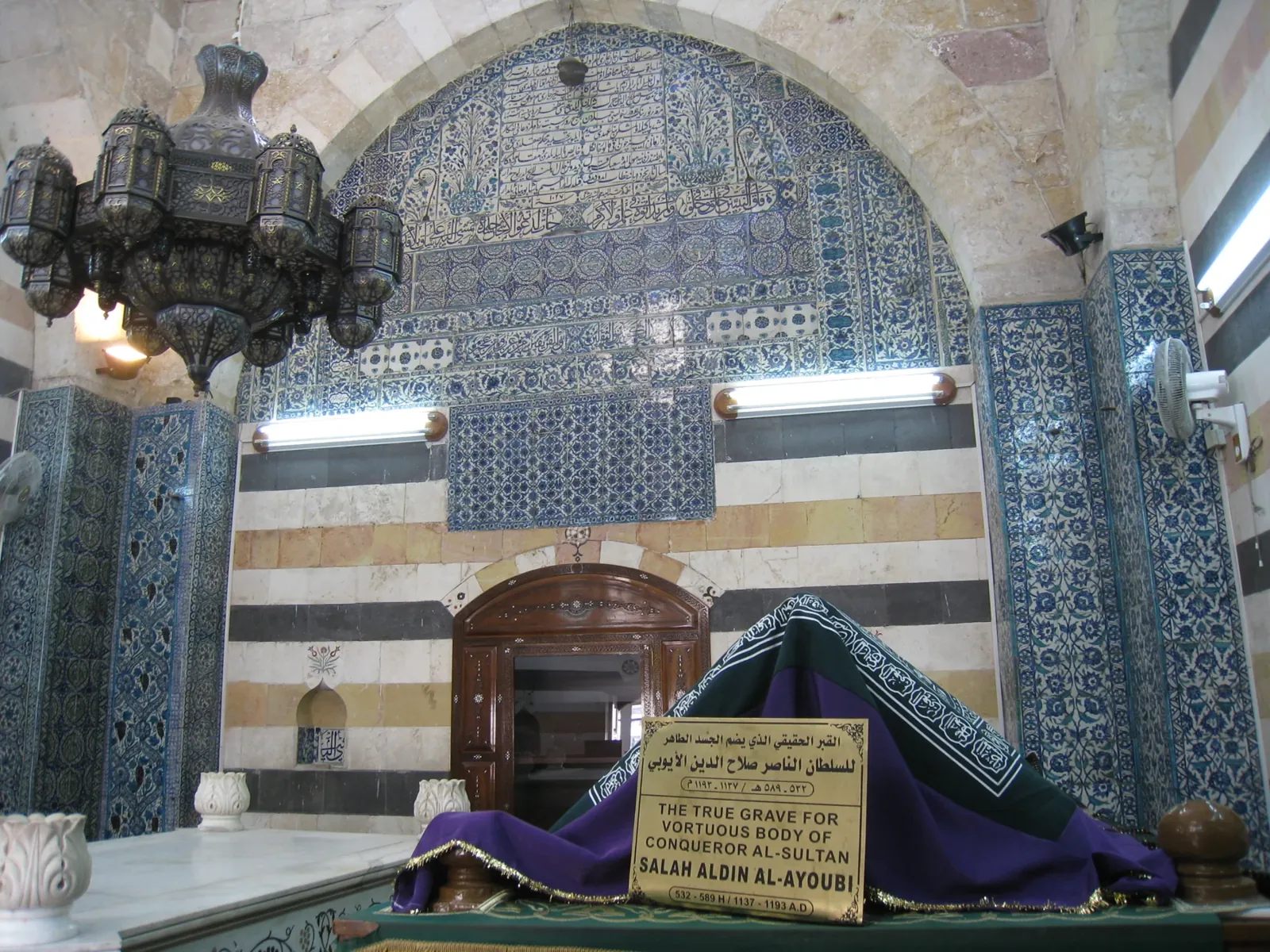
Salah al-Din al-Ayyubi is remembered for founding the Ayyubid dynasty and recovering Jerusalem in 1187. He was a twelfth-century ruler, not a Companion of the Prophet. His mausoleum beside the Umayyad Mosque connects Damascus with a major chapter in Muslim political history and with the enduring memory of leadership, generosity and the struggle over Jerusalem.
Historical context
He died in Damascus in 1193. The modest scale of his mausoleum contrasts with his international reputation, making this a particularly powerful stop when its history is explained. Later patrons also contributed to the building and its furnishings. A visit should distinguish the life of Salah al-Din from later expressions of admiration and from romantic stories that are not securely documented.
Your visit
Combine the mausoleum with the Umayyad Mosque precinct, leaving time for its own explanation. Where the interior is accessible, examine the tomb setting and its later additions; exterior observation remains worthwhile if entry is restricted. The purpose is to understand a person and an era, not simply to collect another landmark photograph.
Dokumentierte historische Grabstätte
Was die Zuordnung bedeutet
Dokumentierte historische Grabstätte. Ein Maqam belegt nicht automatisch eine Bestattung. Jede Seite trennt daher historische Dokumentation von lebendiger Andachtstradition.
Hinweise für den Besuch
Bedeckende Kleidung wird erwartet. Respektieren Sie Gebetszeiten und Hinweise; fragen Sie vor Personenaufnahmen.
Zustand und Zugang
Öffnungszeiten und Kleidungsvorschriften werden vor Ort geprüft. Ein Besuch wird erst nach aktueller Prüfung von Zeiten, Zugang und Route eingeplant.