Syrian desert
Het uitgebreide artikel is beschikbaar in het Arabisch en Engels
Why it matters
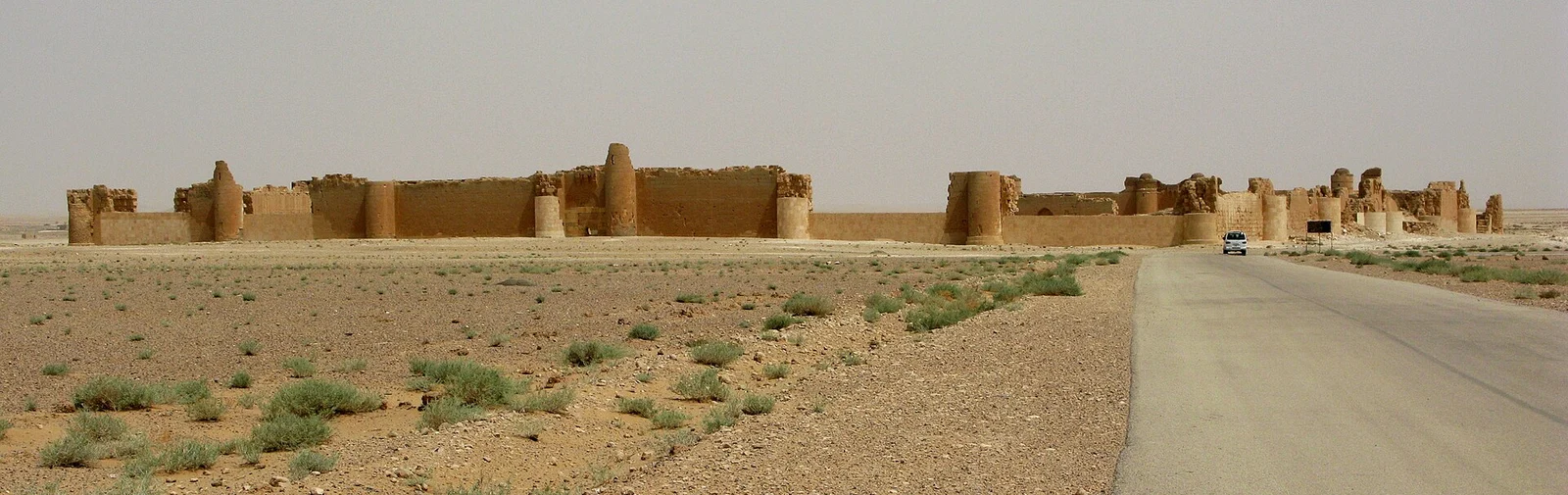
Qasr al-Hayr al-Sharqi broadens Islamic heritage beyond mosques and tombs. This Umayyad desert complex is associated with the caliph Hisham ibn Abd al-Malik and the eighth century. Its walls and surrounding landscape raise questions about how rulers organised settlement, agriculture and resources away from the major cities.
Historical context
The word palace can be misleading if it makes visitors imagine only a royal residence. The complex belongs to a larger system of buildings and managed land. Its value lies in showing how architecture, water and economic life worked together in the early Islamic period. A visit therefore benefits from reading the landscape as well as individual remains.
Your visit
This is a separate desert excursion, not a quick addition to a Damascus city day. Route feasibility, permissions, heat, water and the condition of the site require current local planning. Where a visit is possible, allow time to understand the enclosures and their wider setting; avoid treating an approximate map point as a confirmed driving route.
Architectonische of cultuurhistorische site
Wat de toeschrijving betekent
Architectonische of cultuurhistorische site. Een maqam bewijst op zichzelf geen graf. Elke kaart maakt daarom onderscheid tussen documentatie en levende traditie.
Bezoekersetiquette
Bescheiden kleding is gewenst. Respecteer gebedstijden en aanwijzingen; vraag toestemming voor foto’s.
Staat en toegang
Bezoek onder voorbehoud van actuele toegangscontrole. Een bezoek wordt pas opgenomen na lokale controle van tijden, toegang en route.