Syrian desert
Der ausführliche Artikel ist auf Arabisch und Englisch verfügbar
Why it matters
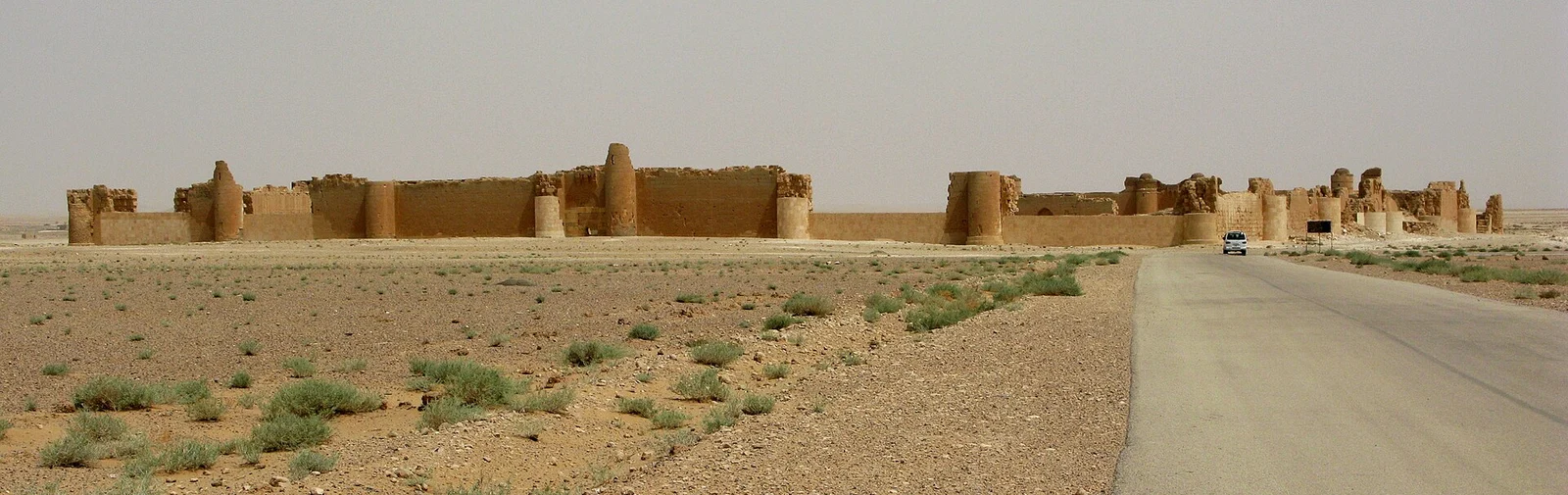
Qasr al-Hayr al-Sharqi broadens Islamic heritage beyond mosques and tombs. This Umayyad desert complex is associated with the caliph Hisham ibn Abd al-Malik and the eighth century. Its walls and surrounding landscape raise questions about how rulers organised settlement, agriculture and resources away from the major cities.
Historical context
The word palace can be misleading if it makes visitors imagine only a royal residence. The complex belongs to a larger system of buildings and managed land. Its value lies in showing how architecture, water and economic life worked together in the early Islamic period. A visit therefore benefits from reading the landscape as well as individual remains.
Your visit
This is a separate desert excursion, not a quick addition to a Damascus city day. Route feasibility, permissions, heat, water and the condition of the site require current local planning. Where a visit is possible, allow time to understand the enclosures and their wider setting; avoid treating an approximate map point as a confirmed driving route.
Architektonische oder kulturgeschichtliche Stätte
Was die Zuordnung bedeutet
Architektonische oder kulturgeschichtliche Stätte. Ein Maqam belegt nicht automatisch eine Bestattung. Jede Seite trennt daher historische Dokumentation von lebendiger Andachtstradition.
Hinweise für den Besuch
Bedeckende Kleidung wird erwartet. Respektieren Sie Gebetszeiten und Hinweise; fragen Sie vor Personenaufnahmen.
Zustand und Zugang
Besuch nur nach aktueller Zugangsprüfung. Ein Besuch wird erst nach aktueller Prüfung von Zeiten, Zugang und Route eingeplant.