Siriese woestyn
Die volledige artikel is beskikbaar in Arabese en Engelse.
Why it matters
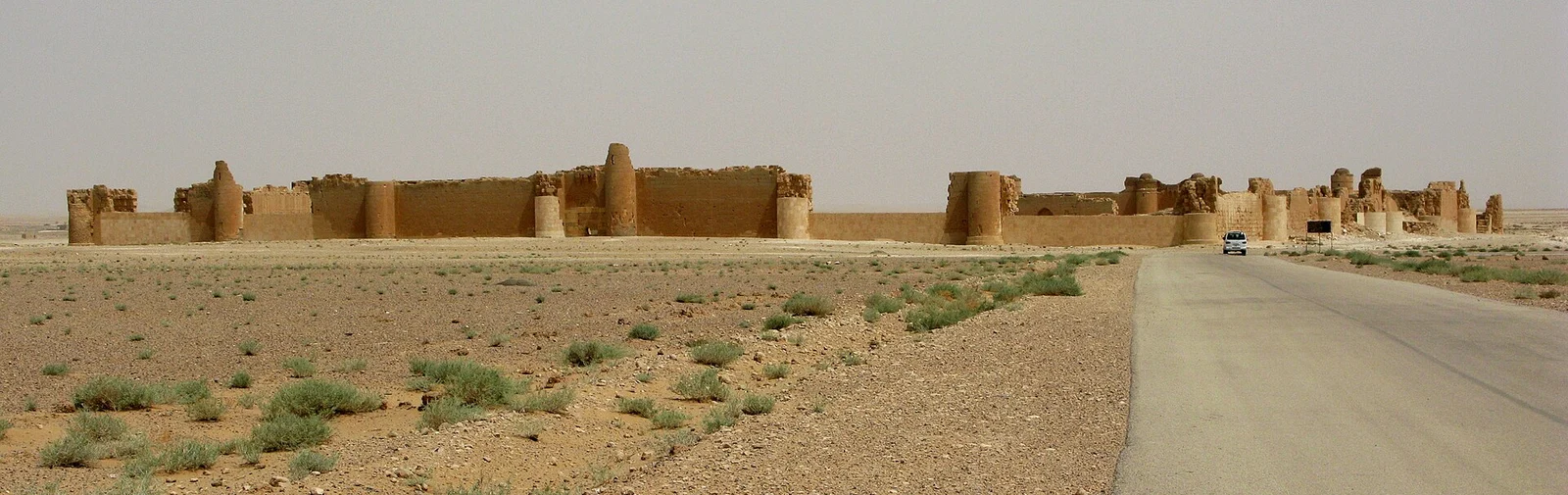
Qasr al-Hayr al-Sharqi broadens Islamic heritage beyond mosques and tombs. This Umayyad desert complex is associated with the caliph Hisham ibn Abd al-Malik and the eighth century. Its walls and surrounding landscape raise questions about how rulers organised settlement, agriculture and resources away from the major cities.
Historical context
The word palace can be misleading if it makes visitors imagine only a royal residence. The complex belongs to a larger system of buildings and managed land. Its value lies in showing how architecture, water and economic life worked together in the early Islamic period. A visit therefore benefits from reading the landscape as well as individual remains.
Your visit
This is a separate desert excursion, not a quick addition to a Damascus city day. Route feasibility, permissions, heat, water and the condition of the site require current local planning. Where a visit is possible, allow time to understand the enclosures and their wider setting; avoid treating an approximate map point as a confirmed driving route.
Argitektoniese of beskawingsterrein
Wat die toeskrywing beteken
Argitektoniese of beskawingsterrein. ’n Maqam bewys nie op sigself dat iemand daar begrawe is nie. Elke kaart en bladsy gee daarom die historiese klassifikasie en onderskei gedokumenteerde geskiedenis van lewende geloofstradisie.
Besoekersetiket
Dra beskeie klere. Respekteer gebedstye en die aanwysings van die terrein se bewaarders; vra toestemming voordat jy aanbidders of besoekers afneem.
Toestand en toegang
Besoek onder die huidige toegangskontrole. ’n Besoek word slegs ingesluit ná onlangse plaaslike kontrole van openingstye, toegang en roetetoestande.