Damascus
Der ausführliche Artikel ist auf Arabisch und Englisch verfügbar
Why it matters
Founded in 1154 by Nur al-Din Mahmud ibn Zangi, this bimaristan opens a different window onto Islamic heritage: the care of the sick and the organisation of medical knowledge. A bimaristan was a hospital. Its presence in the heart of Damascus helps visitors see the city as a place of public service and learning, alongside its mosques and shrines.
Historical context
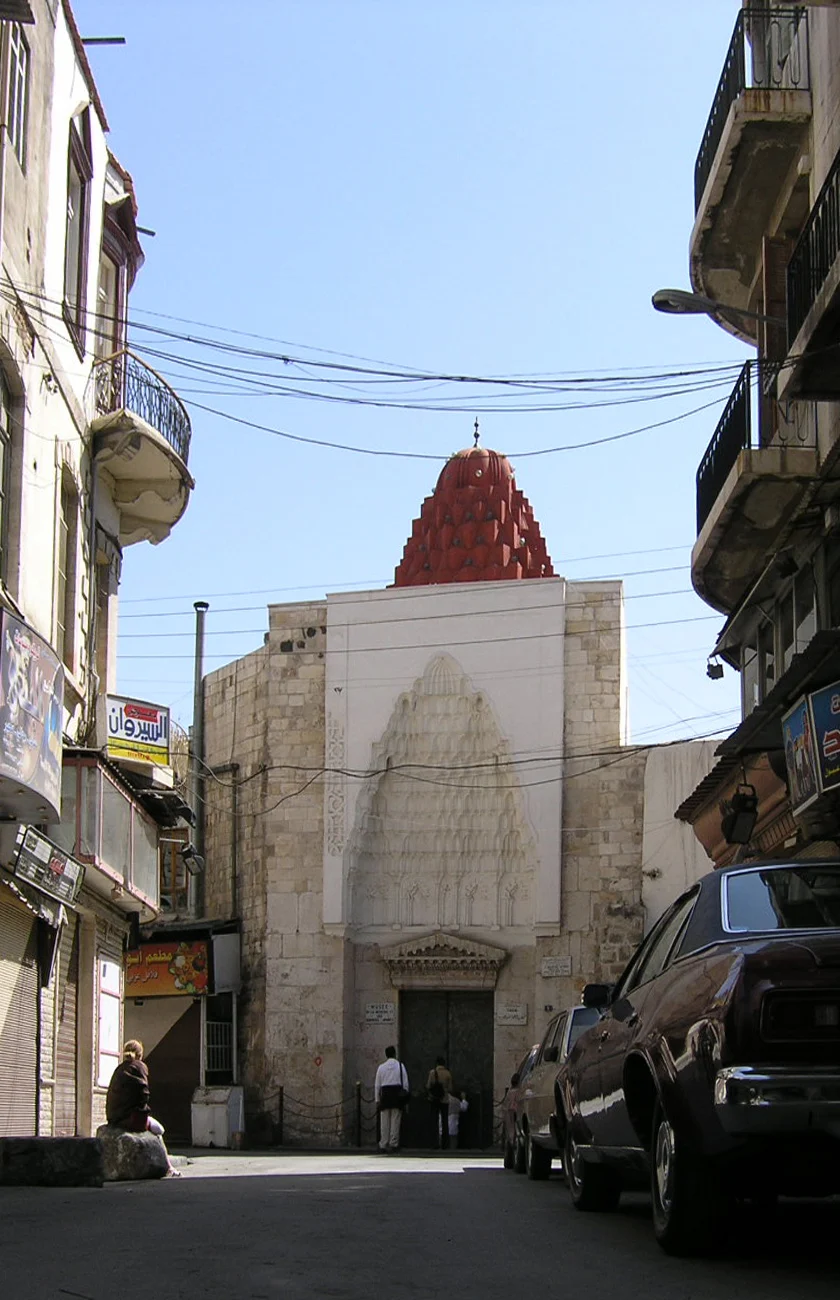
The building’s portal, courtyard and iwans give physical form to a medieval institution supported through charitable endowment. Its historical importance concerns both architecture and the practice of medicine. Discussing waqf—the dedication of resources to an enduring charitable purpose—connects this monument to the wider social life of Islamic cities. Descriptions of historical treatments should not be mistaken for medical advice today.
Your visit
Look for the entrance, the arrangement around the courtyard and the relationship between open and covered spaces. Interior and museum access must be confirmed rather than assumed. Pair this visit with nearby Old Damascus monuments to explore how worship, education and care formed part of the same urban fabric.
Architektonische oder kulturgeschichtliche Stätte
Was die Zuordnung bedeutet
Architektonische oder kulturgeschichtliche Stätte. Ein Maqam belegt nicht automatisch eine Bestattung. Jede Seite trennt daher historische Dokumentation von lebendiger Andachtstradition.
Hinweise für den Besuch
Bedeckende Kleidung wird erwartet. Respektieren Sie Gebetszeiten und Hinweise; fragen Sie vor Personenaufnahmen.
Zustand und Zugang
Öffnungszeiten und Kleidungsvorschriften werden vor Ort geprüft. Ein Besuch wird erst nach aktueller Prüfung von Zeiten, Zugang und Route eingeplant.