
Homs
Artikel penuh boleh didapati dalam bahasa Arab dan Bahasa Inggeris
Why it matters
Khalid ibn al-Walid was a Companion and a pivotal commander in the early Muslim community. The account of Mu’ta in Sahih al-Bukhari 3757 describes him through the image of a sword of Allah, the basis of the name Sayf Allah by which Muslims remember him. His story connects courage and command with the dramatic expansion of the early Islamic state.
Historical context
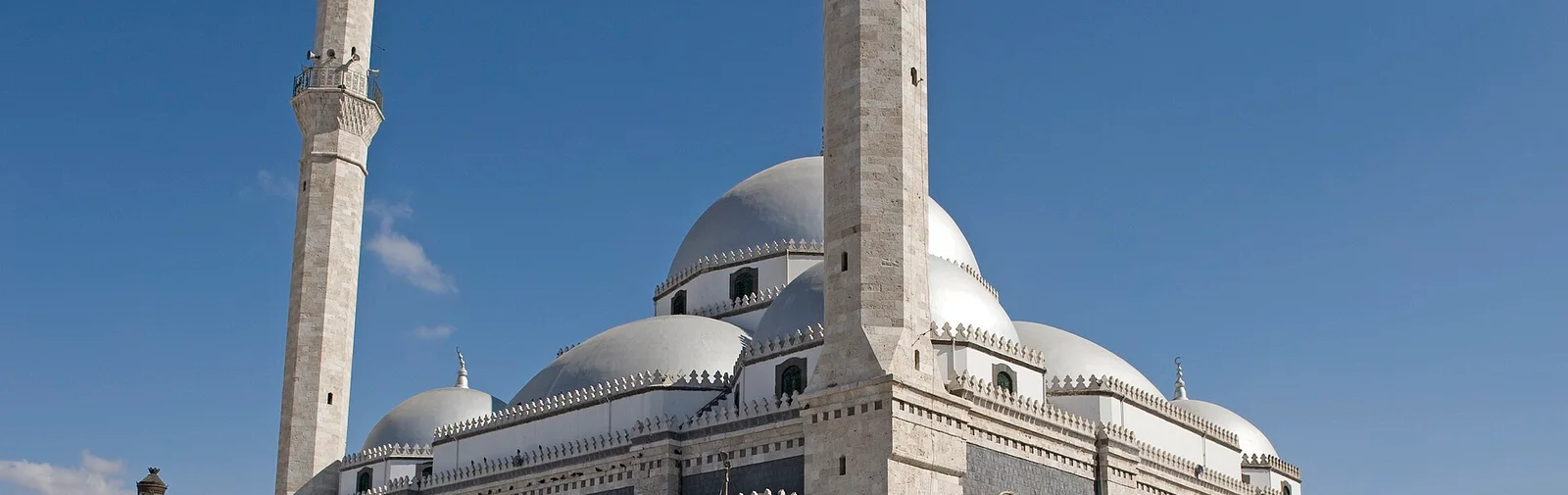
His campaigns in Syria, especially the battle of Yarmouk in 636, helped reshape the region’s history. Homs preserves a long-standing burial tradition associated with him. The mosque seen today is a much later Ottoman building, not a seventh-century structure: this distinction lets visitors appreciate both the Companion’s biography and the generations who commemorated him. The mosque also suffered damage during the Syrian conflict; photographs do not establish its present condition.
Your visit
Make Homs a meaningful stop rather than a photograph break. Discuss Khalid’s life and the geography of the early campaigns, then examine the mosque’s domes, twin minarets and prayer spaces where access permits. Entry to the mausoleum, prayer arrangements and any restoration restrictions are confirmed locally. This is a living place of worship, so quiet observation and the instructions of its custodians come first.
Makam yang dinisbahkan menurut tradisi
Maksud penisbahan tapak
Makam yang dinisbahkan menurut tradisi. Kewujudan maqam tidak dengan sendirinya membuktikan adanya kubur. Oleh itu, setiap kad dan halaman menyatakan pengelasan sejarahnya, dengan membezakan bukti sejarah daripada tradisi keagamaan yang masih hidup.
Adab lawatan
Pakai pakaian yang sopan. Hormati waktu solat dan arahan penjaga tapak; minta izin sebelum mengambil gambar jemaah atau pelawat.
Keadaan dan akses
Jam buka dan keperluan pakaian disemak secara tempatan. Lawatan hanya dimasukkan selepas semakan tempatan terkini tentang waktu buka, akses dan keadaan laluan.