
Damascus
Het uitgebreide artikel is beschikbaar in het Arabisch en Engels
Why it matters
Muhyiddin Ibn Arabi was born in al-Andalus in 1165 and died in Damascus in 1240. A prolific author, poet and Sufi thinker, he became one of the most influential—and debated—figures in Islamic intellectual history. His works, including al-Futuhat al-Makkiyya and Fusus al-Hikam, continue to be studied across languages and communities.
Historical context
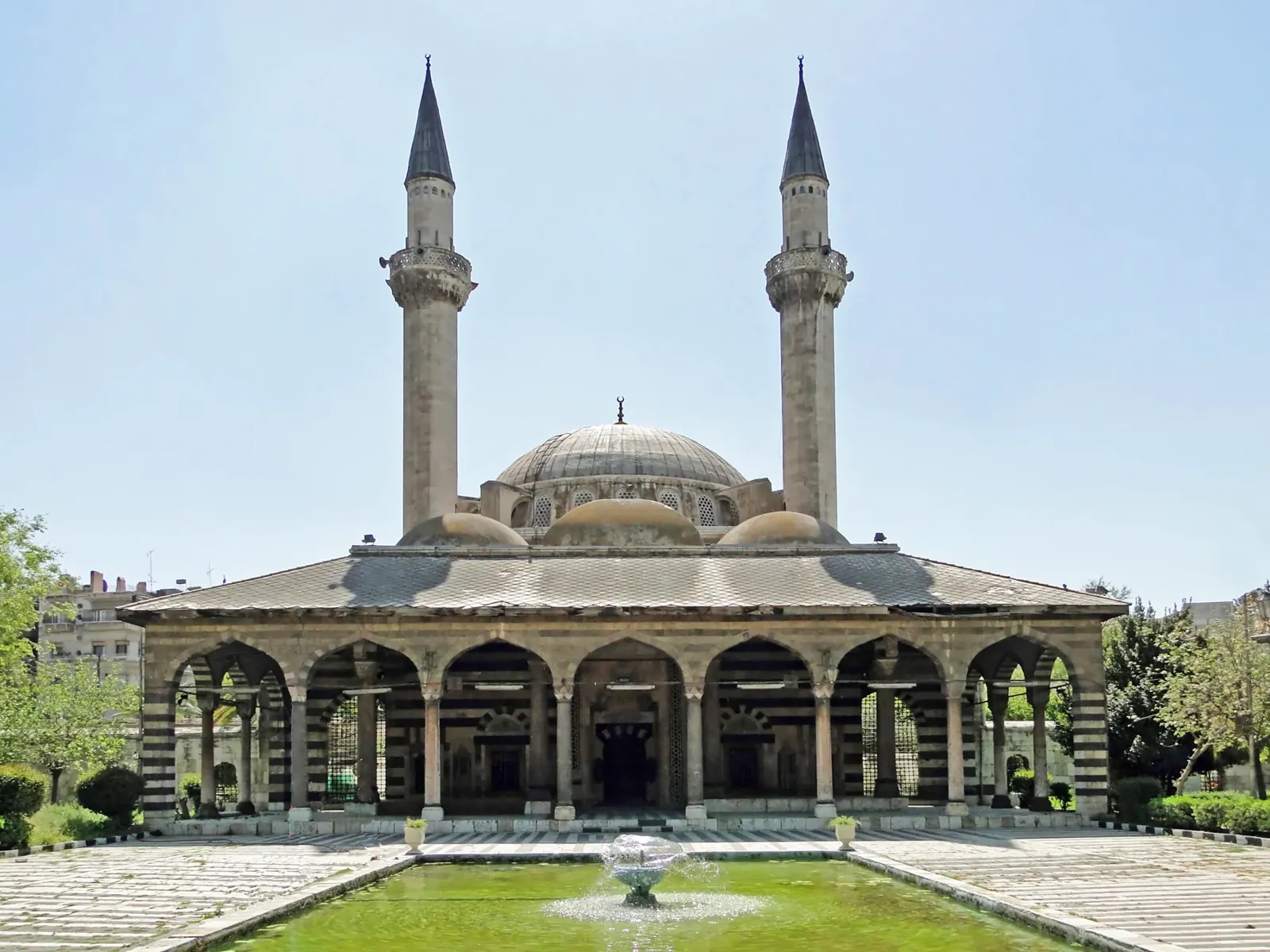
His burial in al-Salihiyya places the hillside neighbourhood within a network of scholarship stretching from the western Islamic world to the eastern Mediterranean. The mosque complex around the tomb was developed under Ottoman patronage centuries later. Visitors can explore both the memory of Ibn Arabi and the role of later rulers in preserving and interpreting that memory. Muslims differ in their assessment of his thought; the tour does not assume a shared theological position.
Your visit
Allow time for al-Salihiyya’s streets as well as the complex itself. Where entry permits, observe the prayer spaces and mausoleum while a guide explains the difference between the scholar’s lifetime and the later building. A quiet visit suits those interested in Sufi literature, the transmission of knowledge and Damascus beyond the walled Old City.
Gedocumenteerde historische begrafenis
Wat de toeschrijving betekent
Gedocumenteerde historische begrafenis. Een maqam bewijst op zichzelf geen graf. Elke kaart maakt daarom onderscheid tussen documentatie en levende traditie.
Bezoekersetiquette
Bescheiden kleding is gewenst. Respecteer gebedstijden en aanwijzingen; vraag toestemming voor foto’s.
Staat en toegang
Openingstijden en kledingvoorschriften worden lokaal gecontroleerd. Een bezoek wordt pas opgenomen na lokale controle van tijden, toegang en route.