Aleppo
Artikel penuh boleh didapati dalam bahasa Arab dan Bahasa Inggeris
Why it matters
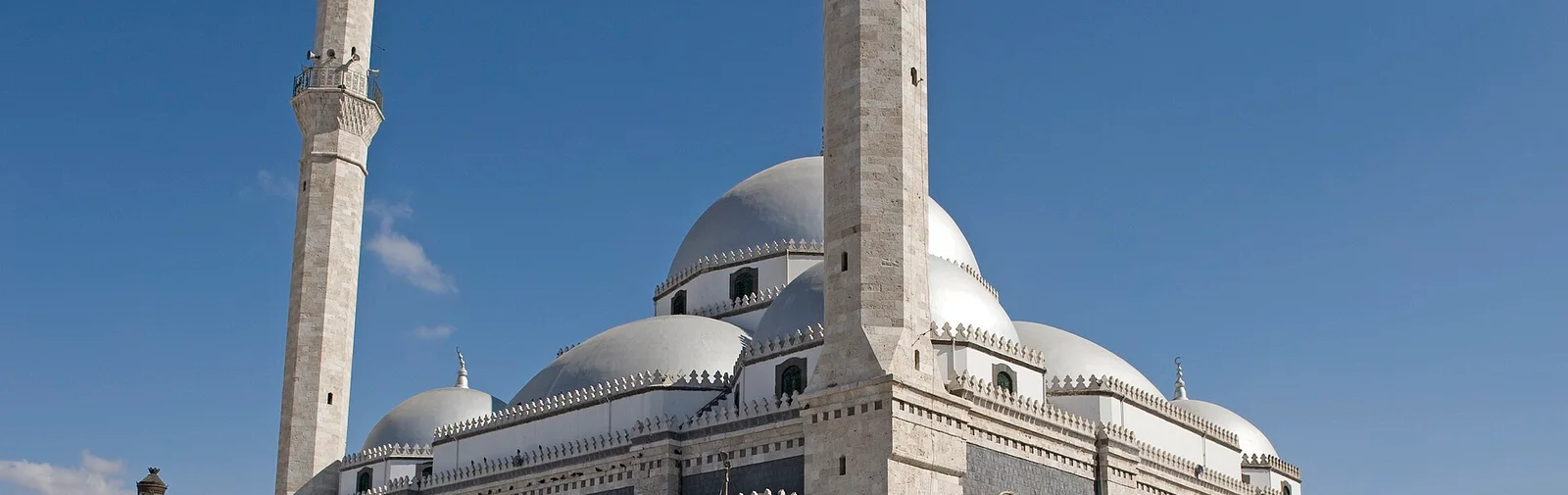
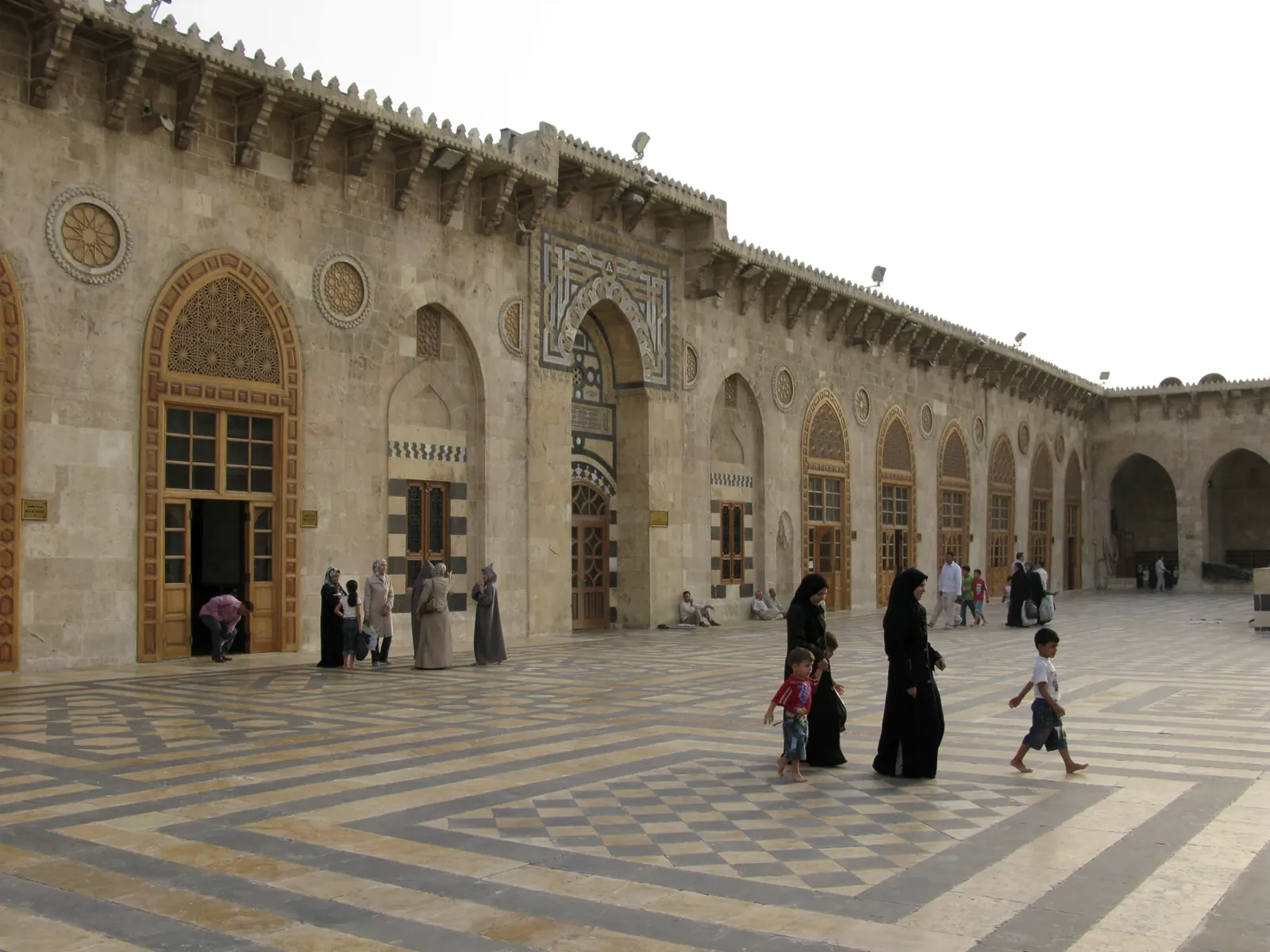
The Great Mosque of Aleppo places congregational worship at the centre of a city famous for trade, scholarship and craft. It is an essential counterpart to the Damascus mosque: together they reveal how Islamic civic life developed in different Syrian cities. The courtyard and prayer spaces formed part of the daily world of the surrounding souqs.
Historical context
Although the mosque’s origins are early Islamic, its visible fabric developed through later dynasties and repeated rebuilding. The historic minaret was destroyed in 2013, making the monument a powerful place to discuss heritage loss and restoration. An older photograph is historical documentation, not proof that every feature survives or can be visited today.
Your visit
Combine the mosque precinct with the nearby covered markets, considering how commerce, charitable institutions and worship supported each other. A visit to interior areas depends on current restoration and access arrangements. Where these do not permit entry, an exterior discussion can still explain the monument’s place in the city without promising an experience that is unavailable.
Tapak seni bina atau tamadun
Maksud penisbahan tapak
Tapak seni bina atau tamadun. Kewujudan maqam tidak dengan sendirinya membuktikan adanya kubur. Oleh itu, setiap kad dan halaman menyatakan pengelasan sejarahnya, dengan membezakan bukti sejarah daripada tradisi keagamaan yang masih hidup.
Adab lawatan
Pakai pakaian yang sopan. Hormati waktu solat dan arahan penjaga tapak; minta izin sebelum mengambil gambar jemaah atau pelawat.
Keadaan dan akses
Pemulihan atau akses yang berubah; pengesahan yang diperlukan. Lawatan hanya dimasukkan selepas semakan tempatan terkini tentang waktu buka, akses dan keadaan laluan.