Aleppo
Die volledige artikel is beskikbaar in Arabese en Engelse.
Why it matters
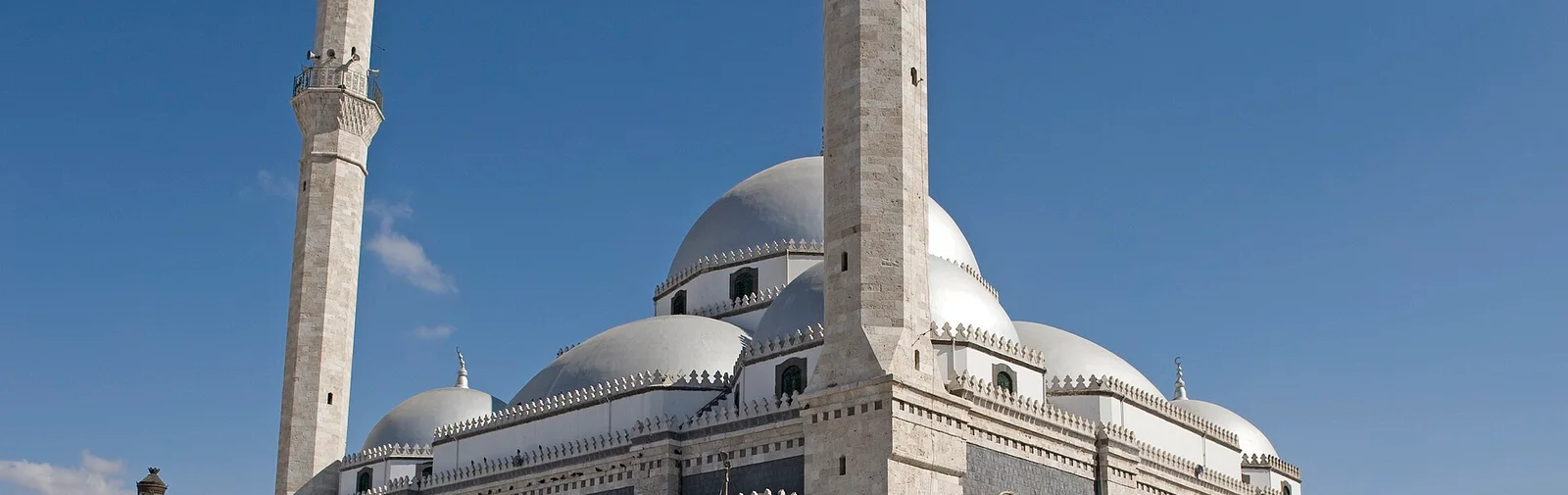
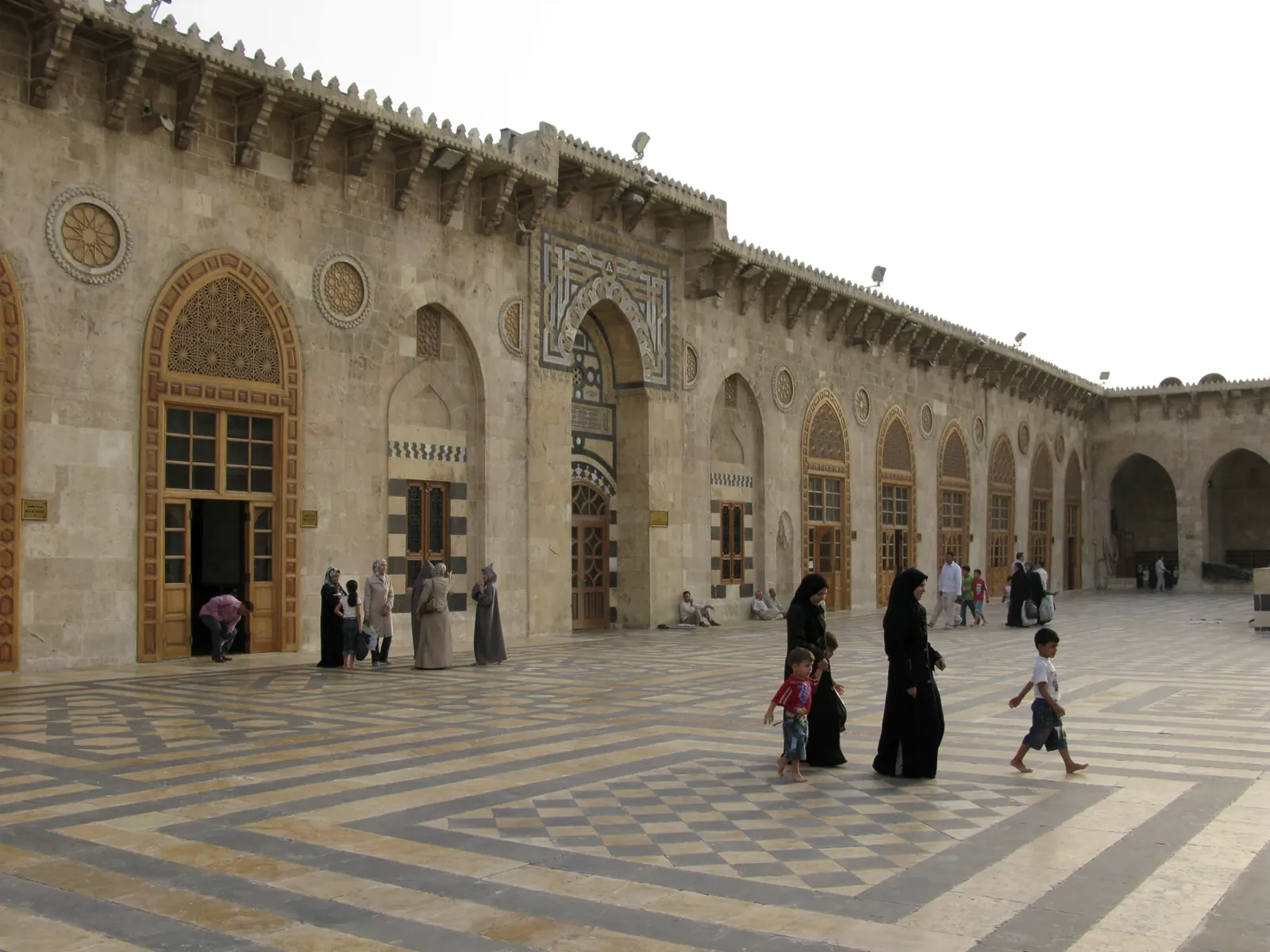
The Great Mosque of Aleppo places congregational worship at the centre of a city famous for trade, scholarship and craft. It is an essential counterpart to the Damascus mosque: together they reveal how Islamic civic life developed in different Syrian cities. The courtyard and prayer spaces formed part of the daily world of the surrounding souqs.
Historical context
Although the mosque’s origins are early Islamic, its visible fabric developed through later dynasties and repeated rebuilding. The historic minaret was destroyed in 2013, making the monument a powerful place to discuss heritage loss and restoration. An older photograph is historical documentation, not proof that every feature survives or can be visited today.
Your visit
Combine the mosque precinct with the nearby covered markets, considering how commerce, charitable institutions and worship supported each other. A visit to interior areas depends on current restoration and access arrangements. Where these do not permit entry, an exterior discussion can still explain the monument’s place in the city without promising an experience that is unavailable.
Argitektoniese of beskawingsterrein
Wat die toeskrywing beteken
Argitektoniese of beskawingsterrein. ’n Maqam bewys nie op sigself dat iemand daar begrawe is nie. Elke kaart en bladsy gee daarom die historiese klassifikasie en onderskei gedokumenteerde geskiedenis van lewende geloofstradisie.
Besoekersetiket
Dra beskeie klere. Respekteer gebedstye en die aanwysings van die terrein se bewaarders; vra toestemming voordat jy aanbidders of besoekers afneem.
Toestand en toegang
Herstel of variabele toegang; verifikasies vereis. ’n Besoek word slegs ingesluit ná onlangse plaaslike kontrole van openingstye, toegang en roetetoestande.