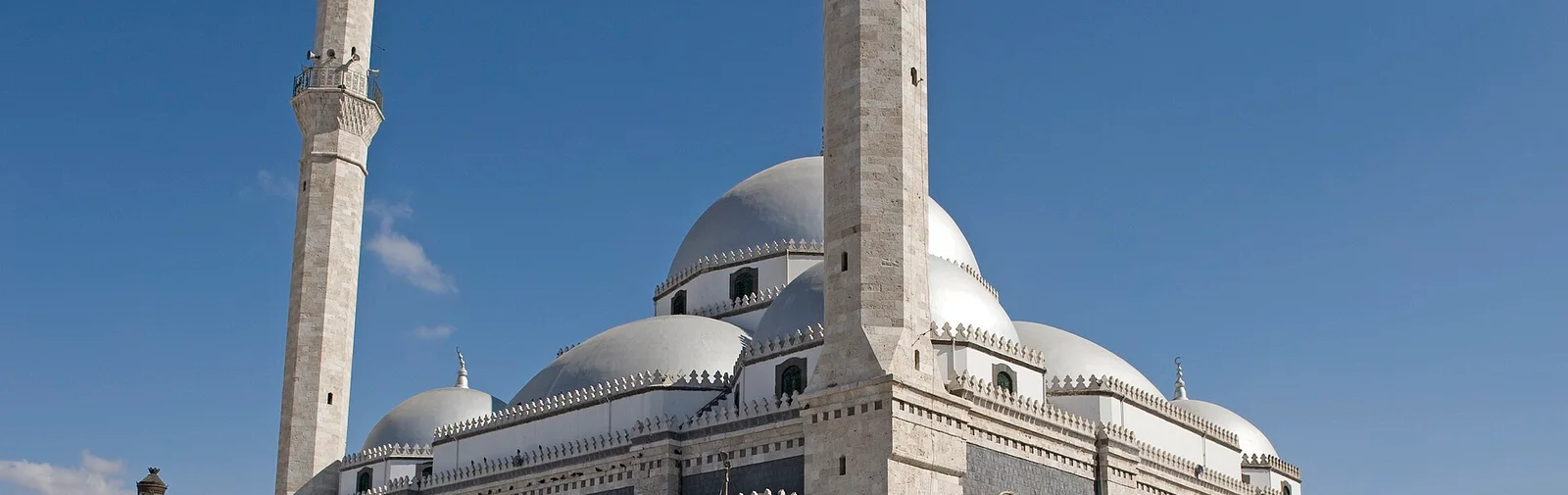
Damascus
El artículo completo está disponible en árabe e inglés
Why it matters
Bilal ibn Rabah is remembered as the Prophet Muhammad’s ﷺ muezzin: the Companion whose call gathered the first Muslim community for prayer. His life carries a particular emotional force for Muslim visitors. An early believer who endured enslavement and persecution in Mecca, he became an enduring example of steadfast faith and human dignity. His importance lies in his place in the earliest community, rather than in the size or splendour of a later monument.
Historical context
A report in Sahih al-Bukhari 1149 connects Bilal’s spiritual distinction with his habit of praying after purification. It offers a personal way to understand him: devotion expressed through a consistent daily act. Biographical traditions connect his later life with Syria, and a maqam in the Bab al-Saghir cemetery area preserves his memory in Damascus. Accounts of his final resting place differ; the devotional association should not be confused with archaeological proof.
Your visit
Begin with Bilal’s story before entering the cemetery. A visit, when access is confirmed, belongs within a quiet walk through Bab al-Saghir, with attention to the site’s inscriptions and the distinction between an original burial and a later memorial. Allow time for reflection and respect people visiting family graves. The maqam is not a surviving building from Bilal’s lifetime, and the visit carries no promised spiritual reward.
Sepultura atribuida por tradición
Qué significa la atribución
Sepultura atribuida por tradición. Un maqam no prueba por sí solo un entierro. Cada ficha distingue la documentación de la tradición devocional viva.
Respeto durante la visita
Se espera vestimenta modesta. Respete oraciones e indicaciones; pida permiso antes de fotografiar.
Estado y acceso
Visita sujeta a verificación actual del acceso. La visita se incluye solo tras verificar horarios, acceso y ruta.