Damaskus
Die volledige artikel is beskikbaar in Arabese en Engelse.
Why it matters
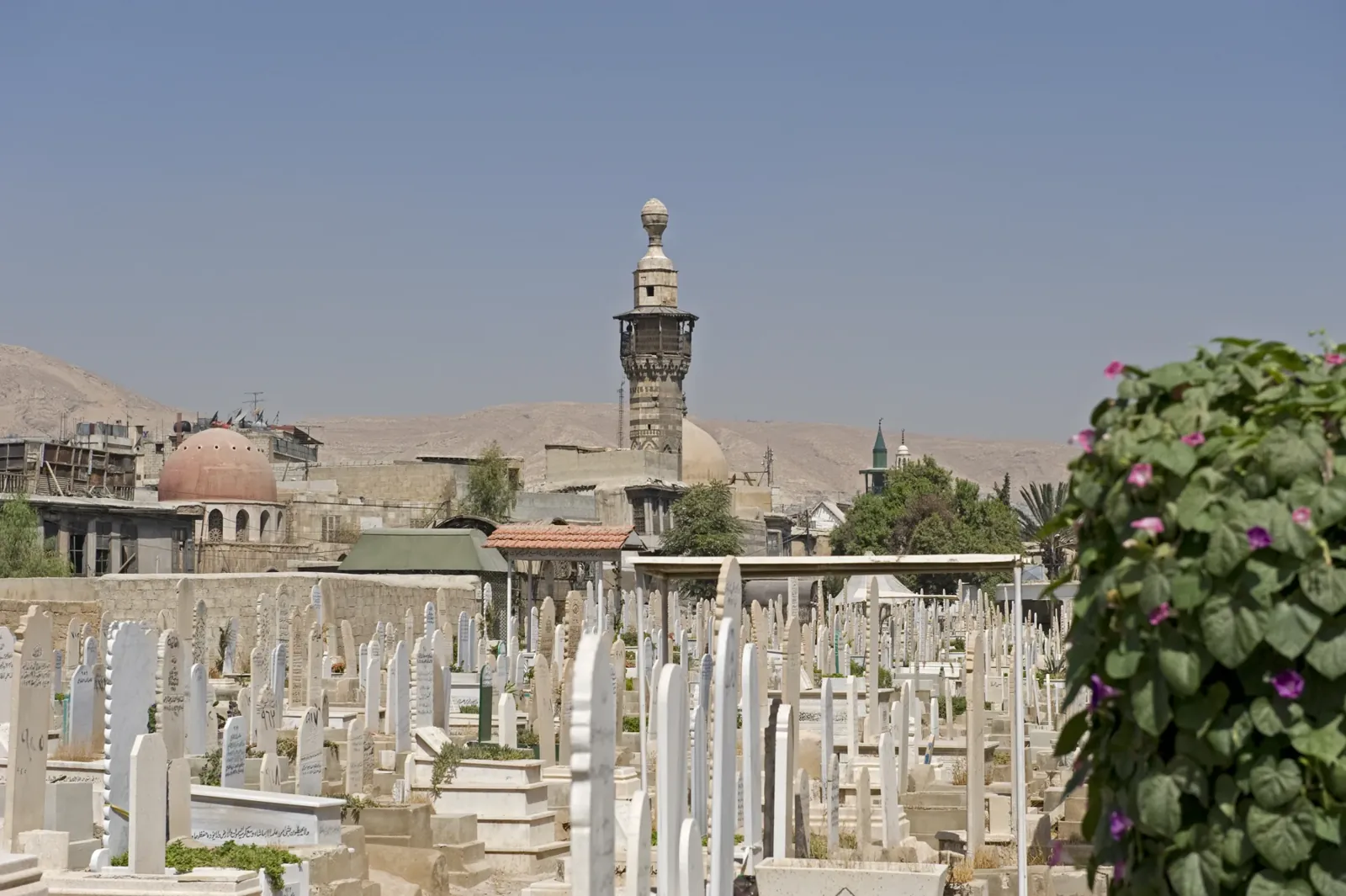
Bab al-Saghir is a historic cemetery beside the southern edge of Old Damascus. Its importance is not confined to one famous name. It preserves the memory of the city’s Muslim communities through burials, inscriptions, family plots and shrines associated with early Islamic figures. A thoughtful visit reveals how Damascus remembers its dead and connects local life with the wider history of Islam.
Historical context
The cemetery contains different kinds of historical evidence. A person’s recorded burial in Damascus, an inscription identifying a particular tomb and a later devotional attribution are not interchangeable. Traditions associated with Bilal, members of the Prophet’s family and other figures therefore need to be considered individually. The entire cemetery should never be described as a collection of conclusively identified Sahaba graves.
Your visit
Walk slowly with a guide who can explain the inscriptions and local customs. Select a small number of relevant stops rather than rushing through a list of names. This remains a cemetery, with families visiting their relatives; avoid stepping on graves, loud group explanations and photography without permission. Exact entrances and access to individual enclosures are checked before the visit.
Argitektoniese of beskawingsterrein
Wat die toeskrywing beteken
Argitektoniese of beskawingsterrein. ’n Maqam bewys nie op sigself dat iemand daar begrawe is nie. Elke kaart en bladsy gee daarom die historiese klassifikasie en onderskei gedokumenteerde geskiedenis van lewende geloofstradisie.
Besoekersetiket
Dra beskeie klere. Respekteer gebedstye en die aanwysings van die terrein se bewaarders; vra toestemming voordat jy aanbidders of besoekers afneem.
Toestand en toegang
Besoek onder die huidige toegangskontrole. ’n Besoek word slegs ingesluit ná onlangse plaaslike kontrole van openingstye, toegang en roetetoestande.