Bosra
Artikel penuh boleh didapati dalam bahasa Arab dan Bahasa Inggeris
Why it matters
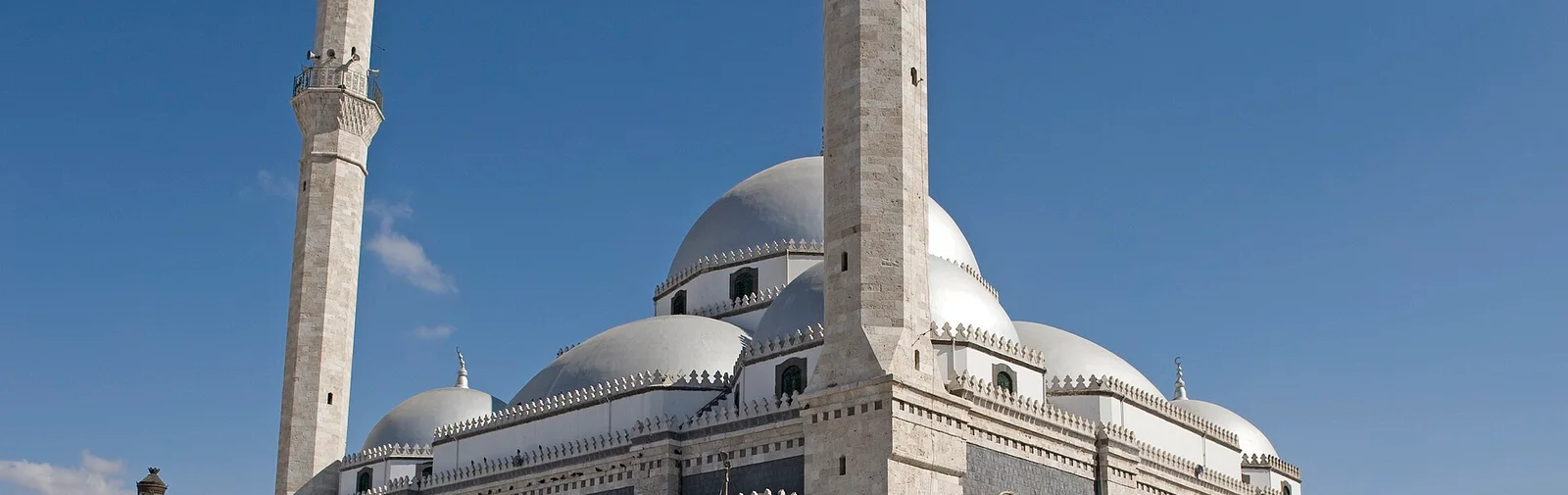
Al-Omari Mosque gives Bosra’s story an essential Islamic chapter alongside its famous Roman theatre. The dark basalt of the town gives the mosque a distinctive material character. Its name recalls the caliph Umar, while the building’s history includes later phases: a traditional foundation association should not be used to date every surviving wall to his lifetime.
Historical context
The mosque illustrates how an ancient city continued to develop under Muslim rule. Rather than treating Bosra as a Roman site with a brief mosque stop, a guided walk can trace the relationship between streets, religious buildings and the wider landscape of southern Syria. Its importance lies in this continuity as well as in its place among Syria’s early mosques.
Your visit
Explore the exterior, masonry and accessible spaces in connection with the surrounding old town. Ground conditions and the availability of interior access are checked locally. This visit pairs naturally with a discussion of pilgrimage and movement through the Hauran, with a slower pace for uneven basalt surfaces.
Tapak seni bina atau tamadun
Maksud penisbahan tapak
Tapak seni bina atau tamadun. Kewujudan maqam tidak dengan sendirinya membuktikan adanya kubur. Oleh itu, setiap kad dan halaman menyatakan pengelasan sejarahnya, dengan membezakan bukti sejarah daripada tradisi keagamaan yang masih hidup.
Adab lawatan
Pakai pakaian yang sopan. Hormati waktu solat dan arahan penjaga tapak; minta izin sebelum mengambil gambar jemaah atau pelawat.
Keadaan dan akses
Pengesahan akses semasa. Lawatan hanya dimasukkan selepas semakan tempatan terkini tentang waktu buka, akses dan keadaan laluan.